Обратная связь
| |
| Рассказ About My Family - Моя семья |
About My Family
My family is not very big, just a typical family: Dad, Mom, me, my brother and sister and our cat. My Mummy is forty-one, she is a teacher of Spanish at the University. She is a born teacher. She has teaching abilities. My Dad is forty-two, he is a professional painter, he works for a design company. My parents both like their work very much.
My elder sister Natasha is nineteen, she goes to the University, she wants to be a teacher of history. She is fond of reading books on history and fiction. My younger brother Igor is only six years old, he goes to the kindergarten. He is very funny, I like to spend my free time teaching him something. Igor likes to play with our cat.
My grandparents are retired. They like gardening. They spend a lot of their time in the garden. They grow vegetables and fruits. We enjoy having fresh vegetables and green on our dinner table. I love my family very much. We always help each other. Everyone in my family is my best friend.
[ перевод на русский язык ]
Моя семья
Моя семья не очень большая, это типичная семья: папа, мама, я, мои брат, сестра и кот. Моей маме сорок один год, она - учительница испанского языка в университете. Она прирожденная учительница. У нее дар преподавать. Моему отцу - сорок два, он профессиональный художник и работает в оформительском комбинате. Обоим моим родителям очень нравится их работа.
Моей старшей сестре Наташе - девятнадцать, она ходит в университет и хочет стать учительницей по истории. Ей нравится читать историческую и художественную литературу. Моему младшему братишке Игорю только шесть лет, он ходит в детский сад. Он очень смешной, мне нравится проводить свободное время, обучая его чему-нибудь. Игорю нравится играть с нашим котом.
Мои бабушка и дедушка - на пенсии. Им нравится возиться на приусадебном участке. Они проводят много времени в огороде. Они выращивают овощи и фрукты. Мы наслаждаемся тем, что на нашем столе всегда свежие овощи и зелень. Я очень люблю свою семью. Мы всегда помогаем друг другу. Каждый член моей семьи - мой лучший друг.
Вопросы к расссказу Моя семья:
1. Do you have a brother or a sister?
2. How many are there in the family?
3. Do your parents understand you?
4. Where do your parents work?
5. In what way do you help your parents?
6. Which of the parents do you want to be like?
7. How do you get along with your family?
8. How old are your grandparents?
Словарик:
typical- типичный
funny - смешной
ability - способность
painter - художник
fiction - художественная литература
green - зелень
to spend - проводить
to grow - выращивать
to enjoy - наслаждаться
to be fond of smth. - нравиться кому-либо
Spanish - испанский |
| Смотреть далее | 22.06.2014 | Отправить ссылку друзьям |
| Система английских времен с точки зрения употребления глагола to vodka |
Система английских времен с точки зрения употребления глагола to vodka
Одним из основных трудностей при освоении английских глаголов - это неправильное употребление их времен. Приводим очень даже полезное пособие. После трех прочтений железно запоминается. Итак, система английских времен с точки зрения употребления глагола " to vоdkа":
1. Во-первых, необходимо уяснить, что в исследуемом языке существуют глаголы:
1.1 неопределенные (Indеfinitе), то есть неизвестно, пьешь ты или не пьешь.
1.2 длительные (Соntinuоus), то есть ты пьешь и находишься в состоянии глубокого запоя.
1.3 завершенные (Реrfесt), то есть ты либо уже вышел из запоя, либо уже окончательно напился и вырубился.
2. Во-вторых, существует объективное:
2.1 настоящее (Рrеsеnt) - ваше отношение к спиртному.
2.2 прошлое (Раst) - темное или светлое.
2.3 будущее (Futurе) - то, что вам светит: цирроз печени, нарко-диспансер, белая горячка и т. п.
3. Теперь все смешиваем:
3.1. Рrеsеnt:
3.1.1. Рrеsеnt Indеfinitе (настоящее неопределенное) см. выше. I vоdkа еvеrу dау. - Я пью водку каждый день.
Примечание: вместо "еvеrу dау" можно употреблять выражения: usuаllу, sеldоm, оftеn, frоm timе tо timе, frоm mеlkауа роsudа, bоlshimi glоtkаmу...
3.1.2. Рrеsеnt Соntinuоus (настоящее длительное): I аm vоdking nоw. - Я пью водку сейчас.
Для эмфатического усиления с этим временем можно употреблять наречия: Не is соnstаntlу vоdking! - Он постоянно поддатый!
3.1.3. Рrеsеnt Реrfесt (настоящее завершенное): I hаvе аlrеаdу vоdkеd. - Я уже нажрамшись. (В ответ на предложение выпить).
3.1.4. Рrеsеnt Реrfесt Соntinuоus (настоящее завершенно-продолженное): I hаvе bееn vоdking sinсе сhildhооd. - Я пью водку с детства. (тип inсlusivе). Я пил водку с детства (но уже не пью). (тип ехсlusivе).
3.2. Раst:
3.2.1. Раst Indеfinitе (прошедшее неопределенное): I vоdkеd уеstеrdау. - Я напился вчера.
Примечание: не путать со временем 3.1.3., там "напился только что".
3.2.2. Раst Соntinuоus (прошедшее длительное): Часто употребляется как придаточное предложение к главному во времени 3.2.1. Unfоrtunаnеlу, I wаs vоdking аt thе mоmеnt mу friend camе. - К несчастью, я пил водку в тот момент, когда пришлел друг.
3.2.3. Раst Реrfесt (прошедшее завершенное): также употребляется как придаточное. I hаd аlrеаdу vоdkеd whеn mу friend саmе. - Я уже упился, когда вошел друг.
3.2.4. Раst Реrfесt Соntinuоus (прошедшее завершенно-продолженное). I hаd bееn vоdking fоr аbоut а mоnth whеn mу friend саmе. - Я пил водку уже около месяца, когда вошел мой друг.
3. Futurе:
3.3.1. Futurе Indеfinitе (будущее неопределенное). I will vоdkа tоmоrrоw. - Я буду пить водку завтра.
Примечание: В придаточных предложениях времени и условия (то есть при отсутствии подходящего времени и условий) вместо времени 3.3.1. употребляется время 3.1.1. : If I vоdkа tоmоrrоw I will bе siсk thе dау аftеr tоmоrrоw. - Если я выпью завтра, я буду болеть послезавтра.
3.3.2. Futurе Соntinuоus (будущее длительное). I will bе vоdking tоmоrrоw аt 7. - Я буду заниматься употреблением горячительных напитков завтра в семь.
П римечание: При горячем желании опохмелиться вместо времени 3.3.1. можно употреблять время 3.3.2.:
Sооn! Sооn I will bе vоdking. - Скоро! Скоро я буду пить водку!
3.3.3. Futurе Реrfесt (будущее завершенное): употребляется при планировании состояния опьянения.
Тоmоrrоw bу 7 о'сlосk I will hаvе vоdkеd. - Завтра к семи я буду нажрамшись.
3.3.4. Futurе Реrfесt Соntinuоus (будущее завершенно-длительное): Ву tоmоrrоw mоrning I will hаvе bееn vоdking fоr а tеrm. - К завтрашнему утру я буду пить водку семестр.
3.3.5 Futurе in thе Раst (будущее в прошедшем): Wоuld уоu vоdkа in thе сhildrеn gаrdеn? - Хотели бы вы пить белую в детском саду?
Мы надеемся, что это доступное изложение системы английских времен поможет вам ими овладеть в совершенстве.
Графическое закрепление употребления глагола to vodka:
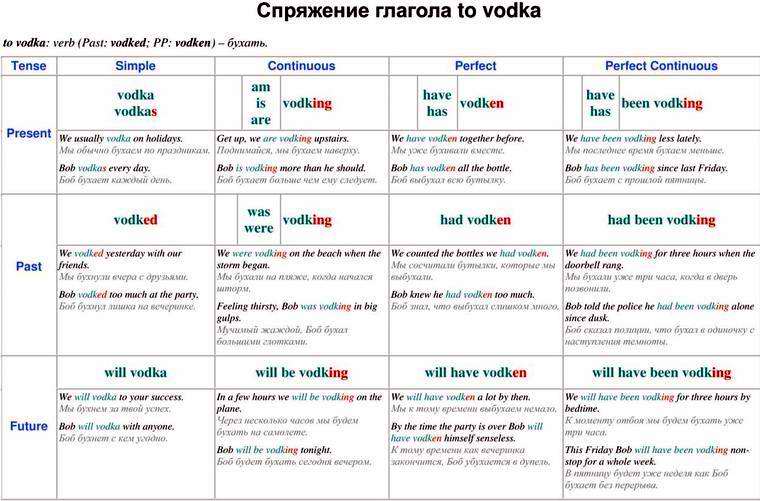
PS: Обратите внимание: глагола to vodka в английском языке не существует, так что, предпочтительнее пользоваться словосочетанием to drink vodka... |
| Смотреть далее | 20.06.2014 | Отправить ссылку друзьям |
| U.S. States - Штаты США, с указанием столиц штата |
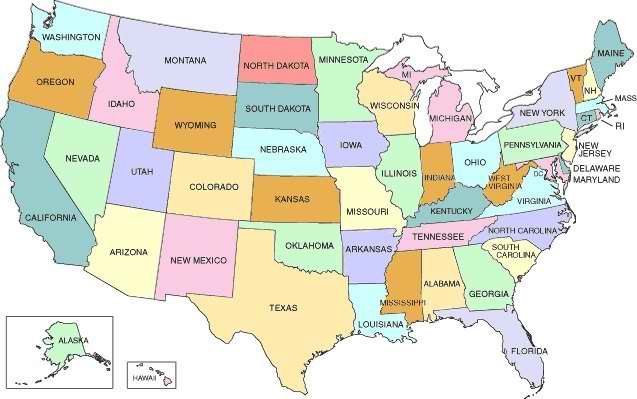
Штаты США, с указанием столиц штата
- Айдахо (Idaho), столица - Бойсе
- Айова (Iowa), столица - Де-Мойн
- Аляска (Alaska), столица - Джуно
- Алабама (Alabama), столица - Монтгомери
- Аризона (Arizona), столица - Финикс
- Арканзас (Arkansas), столица - Литл Рок
- Вашингтон (Washington), столица - Олимпия
- Вайоминг (Wyoming), столица - Шайенн
- Вермонт (Vermont), столица - Монтпилиер
- Виргиния (Virginia), столица - Ричмонд
- Висконсин (Wisconsin), столица - Мэдисон
- Гавайи (Hawaii), столица - Гонолулу
- Дэлавер (Delaware), столица - Довер
- Джорджия(Georgia), столица - Атланта
- Западная Виргиния (West Virginia), столица - Чарлстон
- Индиана (Indiana), столица - Индианаполис
- Иллинойс (Illinois), столица - Спрингфилд
- Калифорния (California), столица - Сакраменто
- Канзас (Kansas), столица - Топика
- Кентуки (Kentucky), столица - Франкфорт
- Колорадо (Colorado), столица -Денвер
- Коннектикут (Connecticut), столица - Хартфорд
- Луизиана (Louisiana), столица - Батон-Руж
- Миннесота (Minnesota), столица - Сент-Пол
- Массачусетс (Massachusetts), столица - Бостон
- Миссисипи (Mississippi), столица - Джексон
- Миссури (Missouri), столица - Джефферсон-Сити
- Монтана (Montana), столица - Хелена
- Мичиган (Michigan), столица - Лансинг
- Мэн (Maine), столица - Огаста
- Мэриленд (Maryland), столица - Аннаполис
- Невада (Nevada), столица - Карсон-Сити
- Небраска (Nebraska), столица - Линкольн
- Нью-Йорк (New York), столица - Олбани
- Нью-Гэмпшир (New Hampshire), столица - Конкорд
- Нью-Джерси (New Jersey), столица - Трентон
- Нью-Мексико (New Mexico), столица -Санта-Фе
- Орегон (Oregon), столица -Сейлем
- Огайо (Ohio), столица -Колумбус
- Оклахома (Oklahoma), столица - Оклахома-сити
- Пенсильвания (Pennsylvania), столица - Гаррисберг
- Род-Айленд (Rhode Island), столица -Провиденс
- Северная Каролина (North Carolina), столица - Роли
- Северная Дакота (North Dakota), столица - Бисмарк
- Теннесси (Tennessee), столица -Нешвилл
- Техас (Texas), столица - Остин
- Флорида (Florida), столица - Таллахасси
- Южная Каролина (South Carolina), столица -Колумбия
- Южная Дакота (South Dakota), столица -Пирр
- Юта (Utah), столица - Солт-Лейк-Сити
|
| Смотреть далее | 20.06.2014 | Отправить ссылку друзьям |
| The Present Perfect Tense - Настоящее совершенное время |
The Present Perfect - Настоящее совершенное время
| Утвердительная форма |
Вопросительная форма |
Отрицательная форма |
| ... + have/has + III |
Have/has ... + III ? |
... have/has not + III |
|
I have (=I've) danced.
Я танцевал. ( уже или до этого)
|
Have I danced?
Я танцевал?
|
I have not (=I haven't) danced.
Я не танцевал.
|
He
She
It |
has danced
=(...'s danced)
|
Has |
he
she
it |
danced? |
He
She
It |
has not danced
=(hasn't danced)
|
We
You
They |
have danced
=(...'ve danced)
|
Have |
we
you
they |
danced? |
We
You
They |
have not danced
=(haven't danced)
|
Сокращенные формы: I have = I’ve [aıv],
she has = she’s [ʃıːz],
we have = we’ve [wıːv],
they have = they’ve [ðeıv],
has not = hasn’t [hæznt],
have not = haven’t [hævnt]
-> Список общепринятых сокращений в английском языке.
Present Perfect образуется при помощи вспомогательного глагола to have в настоящем времени ( have, has ) и причастия прошедшего времени смыслового глагола - Past Participle (III-я форма или ed-форма).
Форма Present Perfect имеет временной акцент "до настоящего момента" и употребляется тогда, когда необходимо подчеркнуть, что результат некоего действия, случившегося в прошлом (не важно, непосредственно перед моментом речи или в более отдаленное время), присутствует в настоящий момент, например: I have lost the key. Я потерял ключ. (значит сейчас я без ключа)
Так как это форма настоящего времени и всегда соотносится с моментом речи, то она не употребляется в тех случаях, когда есть обстоятельства, указывающие на время совершения действия в прошлом.
Present Perfect чаще всего употребляется в начале разговора или сообщения, когда возникает необходимость сообщить о каком-то новом событии. Если после этого разговор продолжается о том же событии с целью выяснения различных обстоятельств и подробностей его осуществления, то действие выражается далее в Past Indefinite:
| I =have seen the film. I saw it in London. – Did you like the film? |
Я видел этот фильм. Я видел его в Лондоне. – Тебе понравился этот фильм? |
Well, I =have had a word with the boss.
He said he would think it over. |
Ну так вот, я поговорил с начальником.
Он сказал, что подумает. |
Однако если даже в самом начале разговора речь идет о действиях, уже известных собеседникам, то в этом случае сразу употребляется Past Indefinite (например, выясняются детали известного обоим собеседникам события):
| Did you have a good trip? |
Как ты съездил? (У тебя была хорошая поездка?) |
Поэтому форму Present Perfect нужно использовать только тогда, когда это действительно важно по смыслу (подразумевается какая-то связь между этим действием и настоящим моментом). Там же, где в этом нет необходимости (большинство случаев), следует использовать простые формы прошедшего времени.
Нужно запомнить, что have (has, had) – это позывные формы Perfect.
В сознании наших учащихся эти слова сразу же ассоциируются с понятием "имею" ("у меня есть"). В сознании же англоязычного слушателя они ассоциируются прежде всего с Perfect. Это значит, что если я начинаю фразу с I have…, то он ожидает далее услышать нечто вроде: …done я сделал, …met я встретил, …finished я закончил и т.п.
Точно также и в вопросе, начинающемся с Have you…? англоязычный собеседник ждет формы Prefect, например типа: …seen видели ли вы?, …bought купили ли вы?, …visited посетили ли вы? и т.п.
Для выражения понятия "имею" ("у меня есть") чаще употребляется выражение have got, в разговоре обычно …’ve got, или в просторечии просто got. А в аналогичном вопросе – Do you have…?
Present Perfect употребляется для выражения:
(основные случаи употребления)
1) Действия или состояния уже завершившегося к моменту речи, если результат свершившегося имеет значение в настоящий момент.
Дополнительные случаи употребления:
2) Вместо Present Perfect Continuous для выражения действия, начавшегося в прошлом и еще продолжающегося в момент речи (с глаголами, не употребляющимися в формах Continuous).
3) В придаточных предложениях времени для выражения будущего завершенного действия.
1) Употребляется для выражения действия или состояния, начавшегося в прошлом и уже завершившегося к моменту речи, если необходимо подчеркнуть, что результат свершившегося имеет значение в настоящий момент. В беседе - назвать впервые, ввести в разговор. Время действия и обстоятельства или совсем не указываются, или время обозначается неопределенно – с помощью неопределенных наречий или слов, обозначающих незаконченные периоды времени. На русский язык переводится прошедшим временем.
| I =have read this book. |
Я прочитал эту книгу.(значит сейчас знаю ее содержание или, теперь могу дать тебе) |
| He =has gone. |
Он ушел.(сейчас его здесь нет) |
| The taxi =has arrived. |
Такси прибыло.(сейчас оно у дома) |
| I =have broken my pencil. |
Я сломал свой карандаш.(сейчас им нельзя писать) |
Примеры использования Present Perfect при передаче фактов, сообщений, новостей:
| I =have seen Tom with a new girlfriend. She is quite pretty. |
Я встретил Тома с новой подружкой. Она довольно хорошенькая. |
| He =has been to Spain twice. |
Он дважды был в Испании. |
| Do you know about John? He =has moved to a new flat? |
Ты знаешь про Джона? Он переехал на новую квартиру. |
Примеры из повседневной жизни:
| I think I =’ve seen you somewhere. |
Думаю, что я встречал вас где-то. |
| Don’t buy the tickets. I =’ve bought them. |
Не покупай билеты. Я уже их купил. |
| Is Clare in? – No, she =has gone to the theatre. |
Клэр дома? – Нет, она пошла в театр. |
В этой форме также дают оценку свершившимся событиям, суммируют на момент речи сделанное ранее, сообщают о полученном опыте, знаниях:
| You =have done everything for us. |
Вы для нас очень много сделали.(оценка) |
| I =’ve been a fool. |
Я был глупцом. (вел себя глупо) |
| I =have won. |
Я выиграл. (итог в результате) |
| You =have spoiled everything. |
Ты все испортил. (все испорчено сейчас) |
Используют в языке средств массовой информации:
| Prices =have gone up. |
Цены выросли. |
| There =has been an air-crash in Poland. |
В Польше произошла авиакатастрофа. |
В общих вопросах:
Have you =done your homework?
Yes, I =have. – No, I haven’t. |
Ты сделал домашнюю работу?
Да. – Нет. |
| Has Mother =returned? |
Мама вернулась? |
| Have you =rung him? |
Ты позвонил ему? |
В специальных вопросах:
| Why =haven’t you put on your coat? |
Почему ты не надел пальто? |
| What =have they done? |
Что они сделали? |
Особенности употребления:
а) Present Perfect может употребляться с обстоятельственными словами, обозначающими период времени, который еще не закончился:
|
today сегодня
this week на этой неделе
this month в этом месяце
|
this year в этом году
this morning сегодня утром
|
Например:
| He has missed a lot of classes this week. |
Он пропустил много занятий на этой неделе. |
| I =haven’t seen Peter today. |
Я не видел Петра сегодня. |
Но если указанный период времени уже закончился, то употребляется форма Past Indefinite, например:
I wrote a letter this morning.
(форма Past Indefinite) |
Я написал письмо сегодня утром. (если разговор происходит, например, днем или вечером) |
| I =haveформа Present Perfect) written a letter this morning. ( |
Я написал письмо сегодня утром. (если разговор тоже происходит утром) |
б) Часто употребляется с наречиями неопределенного времени и частотности если в контексте нет никаких указаний на то, что данное действие относится к прошедшему времени. Их место в предложении: наречия never, ever, often, seldom, already, just – обычно перед смысловым глаголом;
наречия lately, recently, by now, up to now, yet – в конце предложения.
never никогда
ever когда-либо
often часто
already уже
seldom редко |
just только что
by now уже, к настоящему времени
lately в последнее время, недавно
yet еще (в вопросах и отрицаниях)
up to now до настоящего момента |
Например:
| I’m sure we =have never met before. |
Я уверен, мы никогда раньше не встречались. |
| She =has already seen this film. |
Она уже видела этот фильм. |
| They =have arrived by now. |
Они приехали уже. |
| Have you ever =been to the Hermitage. |
Вы когда-нибудь были в Эрмитаже? |
Причем с наречиями lately в последнее время, недавно и just только что всегда употребляется Present Perfect, например:
| He =’s (He has) just gone out. |
Он только что вышел. |
| I =have seen many pictures lately. |
Я посмотрел много картин за последнее время. |
Однако наречие just now только что, не имея смыслового различия с just, традиционно употребляется с прошедшим временем (Past Indefinite), сравните:
| I saw him just now. |
Я только что видел его. |
| I =have just seen him. |
Я только что видел его. |
Примечание: В американском английском чаще используется Past Indefinite, даже при наличии наречий, связываемых обычно с Present Perfect:
| The train already left. |
Поезд уже ушел. |
| I just arrived. |
Я только что пришел. |
Дополнительные случаи употребления:
2) Вместо Present Perfect Continuous для выражения действия, начавшегося в прошлом и еще продолжающегося в момент речи с глаголами, не употребляющимися в формах Continuous. При этом обязательно указывается либо весь период времени, в течение которого происходило действие, либо начальный момент этого периода. На русский язык обычно переводится настоящим временем (в отрицательных предложениях может переводиться прошедшим временем). Например:
| I =have lived here all my life. |
Я живу тут всю свою жизнь. |
| I =’ve always lik ed him. |
Он мне всегда нравился. (раньше и теперь) |
Для обозначения всего периода времени обычно используется предлог for в течение - for a few days в течение нескольких дней, for an hour в течение часа и т.п.
| I =’ve been a teacher for 5 years. |
Я преподаю в течение 5 лет. |
| I =have known her for years. |
Я знаю ее много лет. |
А для обозначения начальной точки отсчета с которой длится данный период употребляется предлог since - с, например:
| I =haven’t been here since 1999. |
Я не был здесь с 1999 года. |
В этом же значении употребляется союз since с тех пор как. При этом в главном предложении употребляется Present Perfect, а в придаточном предложении – Past Indefinite:
| We =have known each other since we were children. |
Мы знаем друг друга с тех пор, как мы были детьми. |
В вопросах о продолжительности периода действия обычно употребляются фразы how long сколько времени и since when с каких пор:
| Since when =have you lived in Paris? |
С какого времени вы живете в Париже? |
| How long =have you known him? |
Сколько времени ты знаешь его? |
3) Для выражения будущего завершенного действия в придаточных предложениях времени. Употребляется вместо Future Perfect для выражения действия, которое закончится в будущем до того, как произойдет действие главного предложения. Придаточные предложения вводятся союзами времени: after после того как, as soon as как только, before прежде чем, until (till) до тех пор пока… не, while в то время как, пока, when когда и т.п. На русский язык переводится будущим временем совершенного вида:
| Wait till I =have finish ed my work. |
Подожди, пока я закончу работу. |
| I’ll give you the book after I =have read it. |
Я дам вам эту книгу, после того как я прочту ее. |
| When we =have had tea I’ll show you my collection. |
Когда мы попьем чаю, я покажу тебе свою коллекцию. |
|
| Смотреть далее | 19.06.2014 | Отправить ссылку друзьям |
| Сказка The Court Cards - Короли, дамы и валеты |
Сказка The Court Cards - Короли, дамы и валетыHow many beautiful things may be cut out of and pasted on paper! Thus a castle was cut out and pasted, so large that it filled a whole table, and it was painted as if it were built of red stones. It had a shining copper roof, it had towers and a draw-bridge, water in the canals just like plate glass, for it was plate-glass, and in the highest tower stood a wooden watchman. He had a trumpet, but he did not blow it.
The whole belonged to a little boy, whose name was William. He raised the draw-bridge himself and let it down again, made his tin soldiers march over it, opened the castle gate and looked into the large and elegant drawing-room, where all the court cards of a pack—Hearts, Diamonds, Clubs, and Spades—hung in frames on the walls, like pictures in real drawing rooms. The kings held each a scepter, and wore crowns; the queens wore veils flowing down over their shoulders, and in their hands they held a flower or a fan; the knaves had halberds and nodding plumes.
One evening the little boy peeped through the open castle gate, to catch a glimpse of the court cards in the drawing room, and it seemed to him that the kings saluted him with their scepters, that the Queen of Spades swung the golden tulip which she held in her hand, that the Queen of Hearts lifted her fan, and that all four queens graciously recognized him. He drew a little nearer, in order to see better, and that made him hit his head against the castle so that it shook. Then all the four knaves of Hearts, Diamonds, Clubs, and Spades, raised their halberds, to warn him that he must not try to get in that way.
The little boy understood the hint, and gave a friendly nod; he nodded again, and then said: “Say something!” but the knaves did not say a word. However, the third time be nodded, the Knave of Hearts sprang out of the card, and placed himself in the middle of the floor.
“What is your name?” the knave asked the little boy. “You have clear eyes and good teeth, but your hands are dirty: you do not wash them often enough!”
Now this was rather coarse language, but, of course, not much politeness can be expected from a knave. He is only a common fellow.
“My name is William,” said the little boy, “and the castle is mine, and you are my Knave of Hearts!”
“No, I am not. I am my king’s and my queen’s knave, not yours!” said the Knave of Hearts. “I am not obliged to stay here. I can get down off the card, and out of the frame too, and so can my gracious king and queen, even more easily than I. We can go out into the wide world, but that is such a wearisome march; we have grown tired of it; it is more convenient, more easy, more agreeable, to be sitting in the cards, and just to be ourselves!”
“Have all of you really been human beings once?” asked little William.
“Human beings!” repeated the Knave of Hearts. “Yes, we have; but not so good as we ought to have been! Please now light a little wax candle (I like a red one best, for that is the color of my king and queen); then I will tell the lord of the castle—I think you said you were the lord of the castle, did you not?—our whole history; but for goodness’ sake, don’t interrupt me, for if I speak, it must be done without any interruption whatever. I am in a great hurry! Do you see my king, I mean the King of Hearts ? He is the oldest of the four kings there, for he was born first,—born with a golden crown and a golden apple. He began to rule at once. His queen was born with a golden fan; that she still has. They both were very agreeably situated, even from infancy. They did not have to go to school, they could play the whole day, build castles, and knock them down, marshal tin soldiers for battle, and play with dolls. When they asked for buttered bread, then there was butter on both sides of the bread, and powdered brown sugar, too, nicely spread over it. It was the good old time, and was called the Golden Age; but they grew tired of it, and so did I. Then the King of Diamonds took the reins of government!”
The knave said nothing more. Little William waited to hear something further, but not a syllable was uttered; so presently he asked,—“Well, and then ?”
The Knave of Hearts did not answer; he stood up straight, silent, bold, and stiff, his eyes fixed upon the burning wax candle. Little William nodded; he nodded again, but no reply. Then he turned to the Knave of Diamonds; and when he had nodded to him three times, up he sprang out of the card, in the middle of the floor, and uttered only one single word,—
“Wax candle!”
Little William understood what he meant, and immediately lighted a red candle, and placed it before him. Then the Knave of Diamonds presented arms, for that is a token of respect, and said:—“Then the King of Diamonds succeeded to the throne! He was a king with a pane of glass on his breast; also the queen had a pane of glass on her breast, so that people could look right into her. For the rest, they were formed like other human beings, and were so agreeable and so handsome, that a monument was erected in honor of them, which stood for seven years without falling. Properly speaking, it should have stood forever, for so it was intended; but from some unknown reasons, it fell.” Then the Knave of Diamonds presented arms, Out of respect for his king, and he looked fixedly on his red wax candle.
But now at once, without any nod or invitation from little William, the Knave of Clubs stepped out, grave and proud, like the stork that struts with such a dignified air over the green meadow. The black clover-leaf in the corner of the card flew like a bird beyond the knave, and then flew back again, and stuck itself where it had been sticking before.
And without waiting for his wax candle, the Knave of Clubs spoke:—
“Not all get butter on both sides of the bread, and brown powdered sugar on that. My king and queen did not get it. They had to go to school, and learn what they had not learnt before. They also had a pane of glass on their breasts, but nobody looked through it, except to see if there was not some. thing wrong with their works inside, in order to find, if possible, some reason for giving them a scolding! I know it; I have served my king and queen all my life-time; I know everything about them, and obey their commands. They bid me say nothing more to-night. 1 keep silent, therefore, and present arms!”
But little William was a kind-hearted boy, so he lighted a candle for this knave also, a shining white one, white like snow. No sooner was the candle lighted, than the Knave of Spades appeared in the middle of the drawing-room. He came hurriedly; yet he limped, as if he had a sore leg. Indeed, it had once been broken, and he had had, moreover, many ups and down in his life. He spoke as follows:—
“My brother knaves have each got a candle, and I shall also get one; I know that. But if we poor knaves have so much honor, our kings and queens must have thrice as much. Now, it is proper that my King of Spades and my Queen of Spades should have four candles to gladden them. An additional honor ought to be conferred upon them. Their history and trials are so doleful, that they have very good reason to wear mourning, and to have a grave-digger’s spade on their coat of arms. My own fate, poor knave that I am, is deplorable enough. In one game at cards, I have got the nickname of ‘Black Peter!’1 But alas! I have got a still uglier name, which, indeed, it is hardly the thing to mention aloud,” and then he whispered,—“In another game, I have been nicknamed ‘Dirty Mads!’2 I, who was once the King of Spades’ Lord Chamberlain! Is not this a bitter fate? The history of my royal master and queen I will not relate; they don’t wish me to do so! Little lord of the castle, as he calls himself, may guess it himself if he chooses, but it is very lamentable,—O, no doubt about that! Their circumstances have become very much reduced, and are not likely to change for the better, until we are all riding on the red horse higher than the skies, where there are no haps and mishaps!”
Little William now lighted, as the Knave of Spades had said was proper, three candles for each of the kings, and three for each of the queens; but for the King and Queen of Spades he lighted four candles apiece, and the whole drawing-room became as light and transparent as the palace of the richest emperor, and the illustrious kings and queens bowed to each other serenely and graciously. The Queen of Hearts made her golden fan bow; and the Queen of Spades swung her golden tulip in such a way, that a stream of fire issued from it. The royal couples alighted from the cards and frames, and moved in a slow and graceful minuet up and down the floor. They were dancing in the very midst of flames, and the knaves were dancing too.
But alas! the whole drawing-room was soon in a blaze; the devouring element roared up through the roof, and all was one crackling and hissing sheet of fire; and in a moment little William’s castle itself was enveloped in flames and smoke. The boy became frightened, and ran off, crying to his father and mother,—“Fire, fire, fire! my castle is on fire!“ He grew pale as ashes, and his little hands trembled like the aspen-leaf The fire continued sparkling and blazing, but in the midst of this destructive scene, the following words were uttered in a singing tone:—
“Now we are riding on the red horse, higher than the skies! This is the way for kings and queens to go, and this is the way for their knaves to go after them!“
Yes I that was the end of William’s castle, and of the court cards. William did not perish in the flames; he is still alive, and he washed his small bands, and said: “I am innocent of the destruction of the castle.“ And, indeed, it was not his fault that the castle was burnt down. |
| Смотреть далее | 19.06.2014 | Отправить ссылку друзьям |
| The Present Continuous Tense - Настоящее продолженное время |
The Present Continuous Tense - Настоящее продолженное время
| Утвердительная форма |
Вопросительная форма |
Отрицательная форма
|
| ... + am/is/are + IV |
Am/Is/Are ... + IV ? |
... am/is/are not + IV |
|
I am (=I'm) reading.
Я читаю. ( сейчас )
|
Am I reading?
Я читаю?
|
I am not (=I'm not) reading.
Я не читаю.
|
He
She
It |
is reading
=(...'s reading)
|
Is |
he
she
it |
reading? |
He
She
It |
is not reading
=(isn't reading)
|
We
You
They |
are reading
=(...'re reading)
|
Are |
we
you
they |
reading? |
We
You
They |
are not reading
=(aren't reading)
|
Сокращенные формы: I am = I’m [aım],
she is = she’s [ʃıːz],
we are = we’re [wıə],
they are = they’re [ðeə],
are not = aren’t [ɑːnt],
is not = isn’t [ıznt]
Present Continuous образуется при помощи вспомогательного глагола to be в настоящем времени ( am, is, are ) и причастия настоящего времени смыслового глагола - Present Participle (IV-я форма или ing-форма).
Present Continuous употребляется для выражения:
(основные случаи употребления)
1. Действия, совершающегося в момент речи.
2. Длительного действия, совершающегося в настоящий период времени.
Дополнительные случаи употребления:
3. Для выражения будущего действия:
а) запланированного действующим лицом;
б) в придаточных предложениях условия и времени.
1) Основным значением Present Continuous является выражение действий, совершающихся в момент речи. Причем наличие слов, обозначающих момент речи: now сейчас, теперь, at this moment в настоящий момент и пр. возможно, но совсем не обязательно.
| Hurry up! The train is coming. |
Поторопись. Поезд идет. |
| I am sitting at my table and writing. |
Я сижу за столом и пишу. (сейчас) |
| It is raining. |
Идет дождь. (в данный момент) |
| You are not listening to me. |
Ты не слушаешь меня. |
| Helen, what are you doing? |
Елена, что ты (сейчас) делаешь? |
Если в настоящий момент для говорящего более важен сам факт действия, чем процесс, то употребляется Present Indefinite, а не Present Continuous:
| Stop talking! Why don’t you listen? |
Перестань разговаривать! Почему ты не слушаешь? |
| Why don’t you answer? |
Почему ты не отвечаешь? |
Если в момент речи происходят два одновременных процесса, то возможны все три варианта передачи этих действий: оба в Indefinite, одно в Indefinite – другое в Continuous, оба в Continuous:
Do you hear what he says?
= Are you listening what he’s saying?
= Do you hear what he’s saying?
|
Ты слышишь (слушаешь), что он говорит? |
2) Для выражения длительного действия, совершающегося в настоящий период времени , хотя и не обязательно в момент речи, например:
| She is studying at school. |
Она учится в школе.(в настоящее время) |
| I am learning to drive. |
Я учусь водить машину.(в настоящее время) |
| My husband is working on an invention. |
Мой муж (в настоящее время) работает над одним изобретением. |
Дополнительные случаи употребления:
3) Для выражения будущего действия:
а) Для выражения запланированного будущего действия (действующим лицом выражено как намерение совершить действие так и уверенность в его совершении, так как имеется договоренность, план, билеты и т.п.), особенно с глаголами, обозначающими движение или действие. В этом случае почти всегда употребляются обстоятельства времени. Эта форма типична для разговорного стиля, а Present Indefinite - для официального стиля.
| I’m leaving tomorrow. |
Я уезжаю завтра. |
| We’re flying to Moscow in the morning. |
Мы вылетаем в Москву утром. |
| He is taking his examination on Monday. |
Он держит экзамен в понедельник. |
| We are dining out on Friday. |
Мы обедаем в гостях в пятницу. |
б) Для выражения будущего действия в обстоятельственных придаточных предложениях условия и времени вводимых союзами условия (if если, in case в случае и т.п.) или времени (before прежде чем, until (till) до тех пор, пока… не, while в то время как, пока, when когда и т.п.), например:
| If I am sleeping when he comes, wake me up, please. |
Если я буду спать, когда он придет, разбудите меня, пожалуйста. |
|
| Смотреть далее | 18.06.2014 | Отправить ссылку друзьям |
| Сказка The Child in the Grave |
Сказка The Child in the GraveIt was a very sad day, and every heart in the house felt the deepest grief; for the youngest child, a boy of four years old, the joy and hope of his parents, was dead. Two daughters, the elder of whom was going to be confirmed, still remained: they were both good, charming girls; but the lost child always seems the dearest; and when it is youngest, and a son, it makes the trial still more heavy. The sisters mourned as young hearts can mourn, and were especially grieved at the sight of their parents' sorrow. The father's heart was bowed down, but the mother sunk completely under the deep grief. Day and night she had attended to the sick child, nursing and carrying it in her bosom, as a part of herself. She could not realize the fact that the child was dead, and must be laid in a coffin to rest in the ground. She thought God could not take her darling little one from her; and when it did happen notwithstanding her hopes and her belief, and there could be no more doubt on the subject, she said in her feverish agony, “God does not know it. He has hard-hearted ministering spirits on earth, who do according to their own will, and heed not a mother's prayers.” Thus in her great grief she fell away from her faith in God, and dark thoughts arose in her mind respecting death and a future state. She tried to believe that man was but dust, and that with his life all existence ended. But these doubts were no support to her, nothing on which she could rest, and she sunk into the fathomless depths of despair. In her darkest hours she ceased to weep, and thought not of the young daughters who were still left to her. The tears of her husband fell on her forehead, but she took no notice of him; her thoughts were with her dead child; her whole existence seemed wrapped up in the remembrances of the little one and of every innocent word it had uttered.
The day of the little child's funeral came. For nights previously the mother had not slept, but in the morning twilight of this day she sunk from weariness into a deep sleep; in the mean time the coffin was carried into a distant room, and there nailed down, that she might not hear the blows of the hammer. When she awoke, and wanted to see her child, the husband, with tears, said, “We have closed the coffin; it was necessary to do so.”
“When God is so hard to me, how can I expect men to be better?” she said with groans and tears.
The coffin was carried to the grave, and the disconsolate mother sat with her young daughters. She looked at them, but she saw them not; for her thoughts were far away from the domestic hearth. She gave herself up to her grief, and it tossed her to and fro, as the sea tosses a ship without compass or rudder. So the day of the funeral passed away, and similar days followed, of dark, wearisome pain. With tearful eyes and mournful glances, the sorrowing daughters and the afflicted husband looked upon her who would not hear their words of comfort; and, indeed, what comforting words could they speak, when they were themselves so full of grief? It seemed as if she would never again know sleep, and yet it would have been her best friend, one who would have strengthened her body and poured peace into her soul. They at last persuaded her to lie down, and then she would lie as still as if she slept.
One night, when her husband listened, as he often did, to her breathing, he quite believed that she had at length found rest and relief in sleep. He folded his arms and prayed, and soon sunk himself into healthful sleep; therefore he did not notice that his wife arose, threw on her clothes, and glided silently from the house, to go where her thoughts constantly lingered—to the grave of her child. She passed through the garden, to a path across a field that led to the churchyard. No one saw her as she walked, nor did she see any one; for her eyes were fixed upon the one object of her wanderings. It was a lovely starlight night in the beginning of September, and the air was mild and still. She entered the churchyard, and stood by the little grave, which looked like a large nosegay of fragrant flowers. She sat down, and bent her head low over the grave, as if she could see her child through the earth that covered him—her little boy, whose smile was so vividly before her, and the gentle expression of whose eyes, even on his sick-bed, she could not forget. How full of meaning that glance had been, as she leaned over him, holding in hers the pale hand which he had no longer strength to raise! As she had sat by his little cot, so now she sat by his grave; and here she could weep freely, and her tears fell upon it.
“Thou wouldst gladly go down and be with thy child,” said a voice quite close to her,—a voice that sounded so deep and clear, that it went to her heart.
She looked up, and by her side stood a man wrapped in a black cloak, with a hood closely drawn over his face; but her keen glance could distinguish the face under the hood. It was stern, yet awakened confidence, and the eyes beamed with youthful radiance.
“Down to my child,” she repeated; and tones of despair and entreaty sounded in the words.
“Darest thou to follow me?” asked the form. “I am Death.”
She bowed her head in token of assent. Then suddenly it appeared as if all the stars were shining with the radiance of the full moon on the many-colored flowers that decked the grave. The earth that covered it was drawn back like a floating drapery. She sunk down, and the spectre covered her with a black cloak; night closed around her, the night of death. She sank deeper than the spade of the sexton could penetrate, till the churchyard became a roof above her. Then the cloak was removed, and she found herself in a large hall, of wide-spreading dimensions, in which there was a subdued light, like twilight, reigning, and in a moment her child appeared before her, smiling, and more beautiful than ever; with a silent cry she pressed him to her heart. A glorious strain of music sounded—now distant, now near. Never had she listened to such tones as these; they came from beyond a large dark curtain which separated the regions of death from the land of eternity.
“My sweet, darling mother,” she heard the child say. It was the well-known, beloved voice; and kiss followed kiss, in boundless delight. Then the child pointed to the dark curtain. “There is nothing so beautiful on earth as it is here. Mother, do you not see them all? Oh, it is happiness indeed.”
But the mother saw nothing of what the child pointed out, only the dark curtain. She looked with earthly eyes, and could not see as the child saw,—he whom God has called to be with Himself. She could hear the sounds of music, but she heard not the words, the Word in which she was to trust.
“I can fly now, mother,” said the child; “I can fly with other happy children into the presence of the Almighty. I would fain fly away now; but if you weep for me as you are weeping now, you may never see me again. And yet I would go so gladly. May I not fly away? And you will come to me soon, will you not, dear mother?”
“Oh, stay, stay!” implored the mother; “only one moment more; only once more, that I may look upon thee, and kiss thee, and press thee to my heart.”
Then she kissed and fondled her child. Suddenly her name was called from above; what could it mean? her name uttered in a plaintive voice.
“Hearest thou?” said the child. “It is my father who calls thee.” And in a few moments deep sighs were heard, as of children weeping. “They are my sisters,” said the child. “Mother, surely you have not forgotten them.”
And then she remembered those she left behind, and a great terror came over her. She looked around her at the dark night. Dim forms flitted by. She seemed to recognize some of them, as they floated through the regions of death towards the dark curtain, where they vanished. Would her husband and her daughters flit past? No; their sighs and lamentations still sounded from above; and she had nearly forgotten them, for the sake of him who was dead.
“Mother, now the bells of heaven are ringing,” said the child; “mother, the sun is going to rise.”
An overpowering light streamed in upon her, the child had vanished, and she was being borne upwards. All around her became cold; she lifted her head, and saw that she was lying in the churchyard, on the grave of her child. The Lord, in a dream, had been a guide to her feet and a light to her spirit. She bowed her knees, and prayed for forgiveness. She had wished to keep back a soul from its immortal flight; she had forgotten her duties towards the living who were left her. And when she had offered this prayer, her heart felt lighter. The sun burst forth, over her head a little bird carolled his song, and the church-bells sounded for the early service. Everything around her seemed holy, and her heart was chastened. She acknowledged the goodness of God, she acknowledged the duties she had to perform, and eagerly she returned home. She bent over her husband, who still slept; her warm, devoted kiss awakened him, and words of heartfelt love fell from the lips of both. Now she was gentle and strong as a wife can be; and from her lips came the words of faith: “Whatever He doeth is right and best.”
Then her husband asked, “From whence hast thou all at once derived such strength and comforting faith?”
And as she kissed him and her children, she said, “It came from God, through my child in the grave.” |
| Смотреть далее | 18.06.2014 | Отправить ссылку друзьям |
| Рассказ I like to travel - Я люблю путешествовать |
I like to travel
I like to travel. First of all, the members of our family usually have long walks in the country. Such walks are called hikes.
If we want to see countryside we have to spend a part of our summer holidays on hikes. During such hikes we see a lot of interesting places, sometimes we meet interesting people.
It's useful for all members of our family. We take our rucksacks. We don't think about tickets and there is no need to hurry up.
As for me, it's more comfortable to travel by train and by plane. But it's difficult to buy tickets for the plane. That's why we buy our tickets beforehand.
When I travel by plane, I don't spend a lot of time going from one place to another, I like to fly. If I travel by train or by plane my friends see me off at the railway station or in the airport.
I like to travel by car. It's interesting too, because you can see many things in a short time. When we go by car, we don't take tickets. We put all things we need in a car. We don't carry them.
Sometimes we go to the seaside for a few days. As usual the weather is warm and we can swim. It's a pleasure to watch white ships.
So I can say that I enjoy all kinds of traveling very much.
[ перевод на русский язык ]
Я люблю путешествовать
Я люблю путешествовать. В моей семье отдают предпочтение прежде всего пешим походам по местности. Такие походы еще называются прогулками.
Если мы хотим побывать за городом, то нам надо провести часть лета в таких прогулках. Во время этих прогулок можно увидеть много достопримечательностей, повстречать интересных людей.
Это очень полезно для всех членов моей семьи. Мы собираем рюкзаки. Нет необходимости торопиться и заботиться о билетах.
На мой взгляд, путешествовать поездом и самолетом удобнее. Но на самолет трудно достать билеты. Поэтому мы покупаем билеты заранее.
Когда я путешествую самолетом, то у меня уходит мало времени на то, чтобы добраться до места назначения. Я люблю летать. Если я путешествую поездом или самолетом, друзья провожают меня на вокзал или в аэропорт.
Я люблю путешествовать на машине. Это также очень интересно, потому что за небольшой промежуток времени можно увидеть много интересного. Когда мы едем на машине, билеты нам не нужны. Все необходимые вещи мы кладем в машину. Нет необходимости их носить.
Иногда мы ездим на море на несколько дней. Обычно погода хорошая, и мы купаемся. Одно удовольствие наблюдать за белыми кораблями.
Итак, я могу сказать, что мне очень нравятся все виды путешествий.
Вопросы к рассказу:
1. How do you like to travel?
2. Do you like to travel?
3. Whom do you like to travel with?
4. Why do we buy tickets beforehand?
5. Do you prefer to travel by sea or by plane? Словарик:
rucksack — рюкзак
to see smb. off — провожать кого-л.
beforehand — заранее
hike — прогулка |
| Смотреть далее | 08.06.2014 | Отправить ссылку друзьям |
| Рассказ Traveling - Путешествия |
Traveling
People began to travel ages ago. The very first travelers were explorers who went on trips to find wealth, fame or something else. Their journeys were very dangerous-but still people keep on going to the unknown lands.
Nowadays it is not as dangerous and much more convenient. Do you want to go somewhere? Hundreds of companies are there to help you. They will take care about your tickets and make all the reservations needed.
You don't speak the language of the country you go to? There are interpreters that will help you.
With modern services you can go around the world. You can choose the means of transport you like: plane, ship, train, bicycle or you can travel hiking.
Tourism became a very profitable business because people are ready to spend their money for the great opportunity to have a great time learning about new countries, going sightseeing, resting and enjoying themselves.
[ перевод на русский язык]
Путешествия
Люди начали путешествовать давным-давно. Самые первые путешественники были исследователями, которые отправлялись в путь на поиски богатства, славы или чего-нибудь еще. Их путешествия были очень опасными, но люди все продолжали идти к неизведанным землям.
Сейчас это не так опасно, да и более удобно. Хотите поехать куда-нибудь? Есть сотни компаний, которые помогут вам. Они позаботятся о ваших билетах и забронируют все, что нужно.
Вы не говорите на языке страны, в которую едете? Вам на помощь придут переводчики.
Современный уровень сервиса дает вам возможность путешествовать вокруг света. Вы можете выбрать вид транспорта, который вам нравится: самолет, корабль, поезд, велосипед, или вы можете путешествовать пешком.
Туризм стал очень выгодным бизнесом, потому что люди готовы платить деньги за хорошую возможность великолепно провести время, изучая новые страны, осматривая достопримечательности, отдыхая и получая при этом удовольствие.
Вопросы к рассказу:
1. Were their journeys safe?
2. Who were the first travelers?
3.Is it more convenient to travel now?
4. Why did they go on trip?
5. Is tourism a profitable business? Why?
6. What kinds of transport can you choose from?
Vocabulary:
journey — путешествие
ticket — билет
dangerous — опасный
to travel — путешествовать
bicycle — велосипед
train — поезд
profitable — доходный
to enjoy — наслаждаться
to go sightseeing — осматривать достопримечательности |
| Смотреть далее | 07.06.2014 | Отправить ссылку друзьям |
| Рассказ Tourism - Туризм |
Tourism
Twenty years ago not many people traveled overseas for their holidays. The majority of people stayed to have holidays in their country. Today the situation is different and the world seems much smaller.
It is possible to book a holiday to a seaside resort on the other side of the world through the Internet. Staying at home, you can book it through the Web or by phone. The plane takes you straight there and within some hours of leaving your country, you can be on a tropical beach, breathing a super clean air and swimming in crystal warm water of tropical sea.
We can travel by car, by train or plane, if we have got a long distance tour. Some young people prefer walking or hitch-hike traveling, when you travel, paying nearly nothing. You get new friends, lots of fun and have no idea where you will be tomorrow. It has great advantages for the tourists, who want to get the most out of exploring the world and give more back to the people and places visited. If you like mountains, you could climb any mountains around the globe and there is only one restriction. It is money. If you like traveling, you have got to have some money, because it is not a cheap hobby indeed. The economy of some countries is mainly based on tourism industry. Modern tourism has become a highly developed industry, because any human being is curious and inquisitive, we like leisure, visit other places. That is why tourism prospers.
People travel from the very beginning of their civilization. Thousands years ago all people were nomads and collectors. They roamed all their lives looking for food and better life. This way human beings populated the whole planet Earth. So, traveling and visiting other places are the part of our consciousness. That is why tourism and traveling are so popular.
Nowadays tourism has become a highly developed business. There are trains, cars and air jet liners, buses, ships that provide us with comfortable and secure traveling.
If we travel for pleasure, by all means one would like to enjoy picturesque places they are passing through, one would like seeing the places of interest, enjoying the sightseeing of the cities, towns and countries.
Nowadays people travel not only for pleasure but also on business. People have to go to other countries for taking part in different negotiations, for signing some very important documents, for participating in different exhibitions, in order to exhibit the goods of own firm or company. Traveling on business helps people to get more information about achievements of other companies, which will help making own business more successful.
There are a lot of means of traveling: traveling by ship, by plane, by car, walking. It depends on a person to decide which means of traveling one would prefer.
[ перевод на русский язык ]
Туризм
Еще двадцать лет назад немногие люди ездили в отпуск за границу. Большая часть людей проводила отпуск в своей стране. Сегодня ситуация другая, и мир кажется стал намного меньше.
Сегодня стало возможным зарезервировать место на морском курорте на другой стороне мира через Интернет.
Не выходя из дома, вы можете заказать билеты через сеть или по телефону. Самолет доставит вас прямо туда, куда вы желаете, и через несколько часов после отбытия из своей страны, вы сможете оказаться на тропическом побережье, наслаждаясь чистейшим воздухом, плавая в кристально чистой, теплой воде тропического моря.
Мы можем путешествовать на автомобиле, поездом или самолетом, если нам предстоит долгая дорога. Некоторые молодые люди предпочитают путешествовать пешком или автостопом, при этом почти ничего не тратя на свое путешествие. Вы встречаете новых друзей, развлекаетесь и понятия не имеете, где будете завтра. В этом и заключается большое преимущество для туристов — тех, кто хочет получить все, что только возможно от исследования мира, при этом не сильно утруждая людей вокруг. Если вы любите горы, вы могли бы подниматься на любые горы по всему земному шару. Есть только одно ограничение. Это деньги. Если вы любите путешествовать, у вас должны быть деньги, потому что это, в действительности, не дешевое хобби.
Экономика некоторых стран существует за счет туризма. Современный туризм стал высоко развитой индустрией, потому что любой человек любопытен, любознателен и любит досуг, любит посещать другие места. Именно поэтому туризм процветает.
Люди путешествуют с самого начала своей цивилизации. Тысячи лет назад все люди были кочевниками и собирателями. Всю свою жизнь они бродили в поисках продовольствия и лучшей жизни. Таким образом люди заселили всю планету Земля. Так что путешествие и посещение других мест — это часть нашего сознания. Именно поэтому туризм и путешествие настолько популярны.
В настоящее время туризм стал высоко развитым бизнесом. Поезда, автомобили и воздушные реактивные лайнеры, автобусы, суда предоставляют нам комфортное и безопасное путешествие.
Если мы путешествуем ради удовольствия, каждый хотел бы, во что бы то ни стало, насладиться живописными местами, которые он пролетает, хотел бы увидеть интересные места, насладиться достопримечательностями городов и стран.
В настоящее время люди путешествуют не только ради удовольствия, но также и по делам. Люди должны ехать в другие страны для участия в различных переговорах, для подписания некоторых очень важных документов, для участия в различных выставках, чтобы показать товары собственной фирмы или компании. Бизнес-поездки помогают людям получать большее количество информации относительно достижений других компаний, что поможет создать более успешное дело.
Путешествовать можно по-разному: на корабле, самолете, автомобиле, пешком. Все зависит от человека, и его предпочтений.
Вопросы к рассказу:
1. Can we book a holiday to a seaside resort on the other side of the world today?
2. Did the majority of people leave their country to spend holidays twenty years ago?
3. What means of traveling do you know?
4. Is it possible to book a holiday to a seaside resort on the other side of the world from home?
5. Why does tourism prosper?
6. What countries depend mainly on tourism?
7. What is the most interesting means of traveling for you? Why?
8. Where do people like going on vacation?
9. What does traveling give us?
10. Why do most travelers carry a camera with them?
11. What are the means of travelling?
12. How does travelling on business help you?
Словарик:
majority — большинство
overseas — заграница
to seem — казаться
resorts— курорт
to book — заказывать
to hitchhike — путешествовать автостопом
straight — прямо
to breathe — дышать
a tropical beach — тропический пляж
to explore — исследовать
advantage — преимущество
indeed — действительно
to climb — взбираться, карабкаться
restriction — ограничение
curious — любопытный
jet-air liner — реактивный самолет
inquisitive — любознательный
leisure — досуг
city-dweller — городской житель
security — безопасность
variety — разнообразие
to take pictures — фотографировать
to remind — напоминать
castle — крепость, замок
waterfall — водопад
picturesque — живописный
take part in negotiations — принимать участие в переговорах
to broaden one's mind — расширить кругозор
advantages and disadvantages — преимущества и недостатки
exhibition — выставка
in order to — для того чтобы
achievement — достижение
to push the goods — рекламировать товары
according to — согласно
successful — успешный |
| Смотреть далее | 06.06.2014 | Отправить ссылку друзьям |
| Фразы на английском языке на тему умственные способности |
Фразы на английском языке на тему ум, умственные способности, логику
- clever - умный
- bright - сообразительный
- broad-minded - с широким кругозором
- dull (dummy) - тупой
- deep - увлеченный
- educated - образованный
- feeble-minded - слабоумный
- foolish - глупый
- gifted - одаренный
- genius - гениальный
- ignorant - невежественный
- illiterate - безграмотный
- intelligent - знающий, умный
- knowledgeable - знающий
- learned - ученый
- ordinary заурядный
- narrow-minded - с узким кругозором
- quick-minded - сообразительный
- quick-witted - смышленый
- shallow - пустой
- sharp - проницательный
- silly - глупый
- slow coach - туповатый
- slow-minded - несообразительный
- smart - сообразительный, умный
- sluggish медлительный
- stupid - невежественный
- talented - талантливый
- uneducated - необразованный
- unlettered - неграмотный
- unreasonable - неблагоразумный, безрассудный
- well-read - начитанный
- witty остроумный
- wise - мудрый
 |
| Смотреть далее | 05.06.2014 | Отправить ссылку друзьям |
| Правила образования и чтения -s форм в английском языке |
Правила образования и чтения -s форм в английском языке
1) Основной случай: прибавление к инфинитиву глагола или существительному окончания
take [teık] брать – he/she/it takes [teıks] он/она/оно берет
ask [ɑːsk] спрашивать – he/she/it asks [ɑːsks] он/она/оно спрашивает
read [rıːd] читать – he/she/it reads [rıːdz] он/она/оно читает
a book [buk] книга – books [buks] книги
a pencil ['pens(ə)l] карандаш – pencils ['pens(ə)lz] карандаши
a chair стул – chairs стулья
a key [kıː] ключ – keys [kıːz] ключи
Глагол have образует форму 3-го лица ед. числа иначе: have иметь - has
2) Если слово оканчивается на -s, -ss, -sh, -ch, -tch, -x, -z, -zz то прибавляется окончание –es.
push [puʃ] толкать – he pushes ['puʃız] он толкает
teach [tıːtʃ] учить - he teaches ['tıːtʃz] он учит
a class [klɑːs] класс – classes ['klɑːsız] классы
mix [mıks] смешивать – he mixes ['mıksız] он смешивает
a speech речь – speeches речи
Особые случаи:
1) Оканчивается -y с предшествующей согласной.
Заменяется y на i и прибавляется окончание –es; (гласная сохраняет свое чтение как [ aı ] - в ударном слоге и [ ı ] - в безударном)
cry [kraı] кричать - he cries [kraız] он кричит
fly [flaı] летать/(a ~ муха) – he flies [flaız] он летит/ (the ~ мухи)
study ['stʌdı] учиться/заниматься – he studies ['stʌdız] он учится
a factory фабрика – factories фабрики
a city ['sıtı] город - cities['sıtız] города
В случае, когда перед y стоит гласная, то y сохраняется и прибавляется окончание -s:
say [seı] говорить – he says [seız] он говорит
a day [deı] день – days [deız] дни
to play [pleı] играть – he plays [pleız] он играет
2) Оканчивается на –o.
Глаголы, а их, в основном, всего два, go идти и do делать/(или do в роли вспомогательного глагола) принимают в 3-м лице единственного числа окончание -es:
do [du:] делать - he does [dʌz] он делает;
go [gou] идти - he goes [gouz] он идет;
Два слова, встречающихся гораздо реже:
undo [(')ʌn'du] уничтожать сделанное/ расстегивать – he undoes [(')ʌn'dʌz] он уничтожает/расстегивает.
echo ['ekou] - (глагол отражаться и существительное эхо) – echoes ['ekouz] повторяет; отраженные звуки (часто the ~).
Существительные, чаще тоже прибавляют окончание –es:
a veto ['vıtou] вето/запрет – vetoes ['vıtouz] запреты
a hero ['hıərou] герой – heroes ['hıərouz] герои
a potato [pə'teıtou] картофель – potatoes [pə'teıtouz] картофель
Некоторые существительные принимают окончание –s (лучше уточнять по словарю, там это указано):
а) если –o предшествует гласный: radio ['reıdıou] радио – radios ['reıdıouz];
б) в сокращениях: kilos ['kılouz] (kilograms) килограммы, photos ['foutouz] (photogɑraphs) фотографии;
в) итальянские музыкальные термины: piano ['pjænou] рояль - pianos ['pjænouz], sopɑrano [sə'prɑːnou] сопрано – sopɑranos [sə'prɑːnouz].
3) Существительные, оканчивающиеся на –f или –fe.
Образуют множественное число путем изменения f на v и прибавлением окончания -s, точнее - es, (так как буква v на конце слова требует прибавления немого e):
a wife [waıf] жена – wives [waıvz] жены
a shelf полка – shelves полки
a life жизнь – lives жизни
a leaf лист – leaves листья
Исключения данного правила:
a chief начальник – chiefs;
a roof крыша – roofs;
a handkerchief носовой платок - handkerchiefs;
Правила чтения
1) [ s ] – после глухих согласных звуков [f, k, p, t, θ]; (кроме [ ʃ, tʃ, s, ks ], [см. п.3]):
work [wə:k] работать - he works [wə:ks] он работает
a lake [leık] озеро – lakes [leıks] озера
help [help] помогать - he helps [helps] он помогает
a cat [kæt] кошка – cats [kæts] кошки
a belief вера, убеждение – beliefs убеждения
Eсли у существительного в единственном числе перед конечным –th стоит согласный или краткий гласный, то окончание множественного числа произносится по общему правилу: a month [mʌnθ] месяц – months [mʌnθs]; a depth [depθ] глубина – depths [depθs]; a smith [smIθ] кузнец – smiths [smIθs]
2) [ z ] – после звонких согласных и гласных звуков [b, g, v, m, n, ŋ, l, r, ð + гласные]; (кроме [z, ʒ, dʒ], см. п. 3):
see [sı:] видеть - he sees [sı:z] он видит
a hand [hænd] рука – hands [hændz] руки
a boy [bɔı] мальчик – boys [bɔız] мальчики
Если существительное в единственном числе заканчивается на –th [θ] после долгого гласного или дифтонга, то во множественном числе конечный звук [θ] меняется на [ ð], и окончание мнодественного числа –s произносится как [z]: a path [pɑːθ] путь – paths [pɑː ðz]; a mouth [mauθ] рот – mouths [mau ðz].
3) [ ız ] – после следующих, свистящих и шипящих звуков [d ʒ] – dge, ge, [ʒ] - ge, [ʃ] - sh, [ tʃ ] - ch, tch, [s] - s, ss, se, ce, [z]- se, ze, zz, [ks] – x; (звуки ð и θ сюда не относятся, см. предыдущий пункт):
wash [wɔʃ] мыть – he washes ['wɔʃız] он моет
a page [peıdʒ] страница – pages ['peıdʒız] страницы
close [klouz] закрывать - he closes ['klouzız] он закрывает
a voice [vɔıs] голос – voices ['vɔısız] голоса
a horse [hɔ:s] лошадь - horses ['hɔ:sız] лошади
В слове house конечный звук [s] перед окончанием мн. числа изменяется на [z]: a house [haus] дом – houses [hauzız].
Употребление -s форм
Случаи применения:
1) Глаголы в Present Indefinite в 3-м лице единственного числа принимают окончание –s (или –es).
2) Образование множественного числа имен существительных. |
| Смотреть далее | 03.06.2014 | Отправить ссылку друзьям |
| English Tongue Twisters - Cкороговорки на английском языке |
English Tongue Twisters - Cкороговорки на английском языке
Miss Smith's fish-sauce shop seldom sells shellfish. Great gray goats
Where Molly had had "had had", "had had" had had the teacher's approval.
Sunshine city, sunshine city, sunshine city, ...
Twelve twins twirled twelve twigs.
The batter with the butter is the batter that is better!
There's a sandwich on the sand which was sent by a sane witch.
Whenever the weather is cold. Whenever the weather is hot. We'll whether the weather, whatever the weather, whether we like it or not.
How many yaks could a yak pack pack if a yak pack could pack yaks?
What noise annoys an oyster most? A noisy noise annoys an oyster most.
Ripe white wheat reapers reap ripe white wheat right.
Blake's black bike's back brake bracket block broke.
Each Easter Eddie eats eighty Easter eggs.
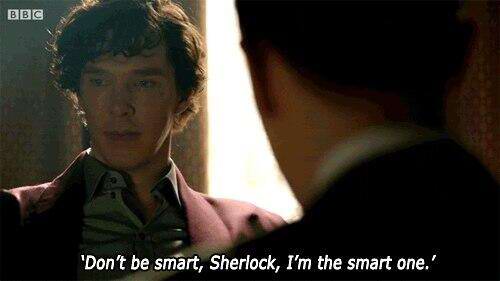
One smart man, he felt smart. Two smart men, they both felt smart. Three smart men, they all felt smart.
If you stick a stock of liquor in your locker it is slick to stick a lock upon your stock or some joker who is slicker is going to trick you of your liquor if you fail to lock your liquor with a lock.
A rough-coated, dough-faced, thoughtful ploughman strode through the streets of Scarborough; after falling into a slough, he coughed and hiccoughed.
A twister of twists once twisted a twist. and the twist that he twisted was a three twisted twist. now in twisting this twist, if a twist should untwist, would the twist that untwisted untwist the twists.
Red lolly, yellow lolly.
I am a mother pheasant plucker, I pluck mother pheasants. I am the best mother pheasant plucker, that ever plucked a mother pheasant!
Mrs Hunt had a country cut front in the front of her country cut pettycoat.
Clowns grow glowing crowns.
Can you imagine an imaginary menagerie manager imagining managing an imaginary menagerie?
Sister Suzie sewing shirts for soldiers Such skill as sewing shirts Our shy young sister Suzie shows Some soldiers send epistles Say they'd rather sleep in thistles Than the saucy, soft short shirts for soldiers Sister Suzie sews.
Peter Piper picked a peck of pickled peppers. A peck of pickled peppers Peter Piper picked. If Peter Piper picked a peck of pickled peppers, Where's the peck of pickled peppers Peter Piper picked?
When a doctor doctors a doctor, does the doctor doing the doctoring doctor as the doctor being doctored wants to be doctored or does the doctor doing the doctoring doctor as he wants to doctor?
If two witches would watch two watches, which witch would watch which watch?
Richard's wretched ratchet wrench.
Rubber baby buggy bumpers.
Betty Botter bought some butter but, said she, the butter's bitter. If I put it in my batter, it will make my batter bitter. But a bit of better butter will make my bitter batter better. So she bought some better butter, better than the bitter butter, put it in her bitter batter, made her bitter batter better. So 'twas better Betty Botter bought some better butter.
A box of biscuits, a box of mixed biscuits, and a biscuit mixer.
The soldier's shoulder surely hurts!
Mr. See owned a saw and Mr Soar owned a seesaw. Now See's saw sawed Soar's seesaw before Soar saw See.
Six sick sea-serpents swam the seven seas.
There was a little witch which switched from Chichester to Ipswich.
She slits the sheet she sits on.
She sells sea shells on the seashore. The seashells she sells are seashells she is sure.
She brews a proper cup of coffee in a copper coffee pot.
She sees seas slapping shores.
She is a thistle sifter. She has a seive of unsifted thistles and a seive of sifted thistles and the seive of unsifted thistles she sifts into the seive of sifted thistles because she is a thistle sifter.
Betty bought some butter, but the butter Betty bought was bitter, so Betty bought some better butter, and the better butter Betty bought was better than the bitter butter Betty bought before!
A skunk sat on a stump and thunk the stump thunk, but the stump thunk the skunk stunk.
I'm not the fig plucker, nor the fig pluckers' son, but I'll pluck figs Till the fig plucker comes.
The sixth sheik's sixth sheep 's sick.
One black beetle bled only black blood, the other black beetle bled blue.
The big black bug's blood ran blue.
I slit a sheet, a sheet I slit, and on that slitted sheet I sit.
Don't spring on the inner-spring this spring or there will be an offspring next spring.
Five fat friars frying flat fish.
Betty bought some bitter butter and it made her batter bitter, so Betty bought some better butter to make her bitter batter better.
Ray Rag ran across a rough road. Across a rough road Ray Rag ran. Where is the rough road Ray Rag ran across?
A Tudor who tooted the flute tried to tutor two tooters to toot. Said the two to the tutor, "Is it harder to toot or to tutor two tooters to toot?"
A big black bug bit a big black bear and made the big black bear bleed blood.
I thought a thought. But the thought I thought wasn't the thought I thought I thought. If the thought I thought I thought had been the thought I thought, I wouldn't have thought so much.
Plain bun, plum bun, bun without plum.
Six stick shifts stuck shut.
The king would sing, about a ring that would go ding.
People pledging plenty of pennies.
To begin to toboggan first, buy a toboggan. But do not buy too big a toboggan! Too big a toboggan is too big a toboggan to buy to begin to toboggan.
Switch watch, wrist watch.
Irish wristwatch
King Thistle stuck a thousand thistles in the thistle of his thumb.
A thousand thistles King Thistle stuck in the thistle of his thumb.
If King Thistle stuck a thousand thistles in the thistle of his thumb,
How many thistles did King Thistle stick in the thistle of his thumb?
Six thick thistle sticks.
How much wood could a woodchuck chuck
if a wooodchuck could chuck wood?
A woodchuck could chuck as much wood
as a woodchuck would chuck
if a woodchuck could chuck wood. |
| Смотреть далее | 03.06.2014 | Отправить ссылку друзьям |
| Формы настоящего времени в английском языке |
Present Indefinite (Simple Present) употребляется для выражения:
- Обычного, постоянного, типичного действия или характерного признака, свойства подлежащего, а также для передачи общеизвестных фактов и простых истин, имеющих место в настоящем, но не привязанных к моменту речи.
- Регулярно повторяющихся действий в настоящем.
- Ряда последовательных действий в настоящем.
Present Continuous употребляется для выражения:
- Действия, совершающегося в момент речи.
- Длительного действия, совершающегося в настоящий период времени.
Present Perfect употребляется для выражения:
Действия или состояния уже завершившегося к моменту речи, если результат свершившегося имеет значение в настоящий момент.
Present Perfect Continuous
употребляется для выражения продолжительного действия начавшегося в прошлом и длившегося до момента речи, причем:
- Действие может еще продолжаться в момент речи (при этом необходимо указать длительность периода действия);
- Действие закончилось непосредственно перед моментом речи, а его результат присутствует в настоящий момент.
|
| Смотреть далее | 01.06.2014 | Отправить ссылку друзьям |
| Фразы и термины на тему Ванная комната |

Air freshener — освежитель воздуха;
After shave lotion — лосьон после бритья;
Beaker ['biːkə] – стакан;
Bath / bathtub [bɑːθ] / ['bɑːθtʌb] — ванна;
Bath mat/bath rug ['bɑːθmæt] — коврик для ванной;
Bathroom ['bɑːθruːm] — ванная комната;
Bathroom Scales ['bɑːθruːm skeɪlz] — напольные весы;
Bathroom Cabinet ['bɑːθruːm 'kæbɪnət] — шкафчик для ванной;
Bath Panel [bɑːθ 'pæn(ə)l] — ванная панель;
Bath towel [bɑːθ 'tauəl] — банное полотенце;
Bath Robe ['bɑːθrəub] (also Robe [rəub]) — халат;
Barrettes — заколки;
Bobby pins — невидимки;
Bidet ['biːdeɪ] – биде;
Cistern ['sɪstən] – бачок;
Cold water faucet — кран холодной воды;
Comb — расческа;
Conditioner/rinse — кондиционер для волос;
Dental floss — зубная нить;
Drain — сток;
Deodorant — дезодорант;
Emery board — пилочка для полировки ногтей;
Fan — вентилятор;
Flannel/Washcloth ['flæn(ə)l] / ['wɔʃklɔθ] — полотенце для лица;
Hair brush — щетка для волос;
Hair dryer — фен;
Hair clips — заколки;
Hairspray — лак для волос;
Hamper — корзина для белья;
Hot water faucet — кран горячей воды;
Hand towel [hænd 'tauəl] — полотенце для рук;
Medicine cabinet/medicine chest — аптечка;
Mixer Tap ['mɪksə tæp] — кран-смеситель;
Mirror — зеркало;
Mouthwash — ополаскиватель для рта;
Nail clipper — кусачки;
Nail file — пилочка для ногтей;
Plughole / Drain ['plʌghəul] / [dreɪn] – водосток;
Plunger — вантус;
Razor — бритва;
Razor blades — лезвия;
Rubber mat — резиновый коврик;
Shower — душ;
Scissors — ножницы;
Shampoo — шампунь;
Shaving creme — крем для бритья;
Shower cap — шапочка для купания;
Shower curtain — шторка;
Shower curtain rod — карниз для душевой занавеси;
Shower Cubicle ['ʃəuə 'kjuːbɪkl] — душевая кабина;
Shower head ['ʃəuə hed] — головка душа (душевая лейка);
Shower Tray ['ʃəuə treɪ] — душевой поддон;
Sink — раковина;
Soap dispenser [səup dɪ'spen(t)sə] — дозатор для жидкого мыла;
Soap dish [səup dɪʃ] — мыльница;
Soap [səup] — мыло;
Sponge — губка, мочалка;
Styptic pencil — кровоостанавливающий карандаш;
Tap / faucet [tæp]/ ['fɔːsɪt] — водопроводный кран;
Toilet ['tɔɪlət] — унитаз;
Toilet paper holder — держатель для туалетной бумаги;
Toilet paper ['tɔɪlət 'peɪpə] — туалетная бумага;
Toilet tank — сливной бачок;
Toilet seat — сиденье на унитаз;
Toothbrush holder ['tuːθbrʌʃ 'həuldə] — держатель зубной щетки;
Toothbrush ['tɔɪlət brʌʃ] — зубная щетка;
Towel rack ['tauəl reɪl] — вешалка для полотенец;
Tweezers — пинцет;
Tiling ['taɪlɪŋ] — кафельное покрытие;
Vanity ['vænətɪ] — туалетный столик;
Washbasin ['wɔʃˌbeɪs(ə)n] – раковина;
Washcloth — мочалка из махровой ткани.
 |
| Смотреть далее | 01.06.2014 | Отправить ссылку друзьям |
| Переходные и непереходные глаголы в английском |
Переходные и непереходные глаголы
Transitive and intransitive verbs
Переходными называются глаголы, выражающие действия, которые переходят на предметы, на которые эти действия направлены. В предложении за переходными глаголами, как правило, следуют существительные (или местоимения), обозначающие предметы, на которые переходят действия. Эти существительные (местоимения) выступают в роли прямого дополнения к переходному глаголу и отвечают на вопрос кого?, что?. Переходные глаголы употребляются как в действительном, так и в страдательном залоге.
| I saw an interesting film yesterday. |
Вчера я видел (что?) интересный фильм. |
| He invited me to the concert. |
Он пригласил (кого?) меня на концерт. |
| The girl is writing a letter. |
Девочка пишет (что?) письмо. |
Непереходными называются глаголы, выражающие действия, которые не переходят непосредственно на предмет или лицо. За этими глаголами прямое дополнение следовать не может. Непереходные глаголы употребляются только в действительном залоге.
| My friend lives in Kiev. |
Мой друг живет в Киеве. |
| I went to the cinia last week. |
Я ходил в кино на прошлой неделе. |
| My father arrived yesterday. |
Мой отец приехал вчера. |
В некоторых словарях переходные глаголы помечены сокращением v.t. или v/t (verb transitive), а непереходные - v.i. или v/i (verb intransitive).
Примечание: Особенностью английского языка является то, что почти все английские глаголы в одних своих значениях являются переходными, а в других - непереходными, например: to sit - v/i сидеть, v/t сажать; to hold - v/t держать, v/i держаться; to speak – v/i – говорить, v/t сказать. И соответственно могут принимать, либо не принимать, прямое дополнение.
В русском же языке такие глаголы отличаются по внешнему виду либо наличием окончания -ся при непереходных глаголах, либо являются совершенно различными.
| Глагол переходный, v/t. |
Глагол непереходный, v/i. |
| I walked the boy out of the room. - Я вывел (кого?) мальчика из комнаты. |
I walked in the park for half an hour. - Я гулял в парке полчаса. |
| He opened the door. - Он открыл (что?) дверь. |
The door opened. - Дверь открылась. |
| He burned all his matches. - Он сжег (что?) все свои спички. |
The lamp burned brightly. - Лампа ярко горела. |
| She dropped her bag. - Она уронила (что?) сумку. |
The bag dropped on the floor. - Сумка упала на пол. |
|
| Смотреть далее | 30.05.2014 | Отправить ссылку друзьям |
| Выражения с предлогами на тему Любовь - Страсть |
affection for smb - любовь к кому-то
appetence for smb - половое влечение к кому-то
admiration of / for smb - восхищение кем-то
adoration of / for smb - обожание кого-то
be in love with smb - быть влюбленным в кого-то
be infatuated with smb - влюбиться / увлечься кем-то
beagog with smb - сходить с ума по кому-то
be mad with smb - быть безумно влюбленным в кого-то
fall for smb - влюбиться в кого-то
fall in love with smb - влюбиться в кого-то
love for / of / to smb - любовь к кому-то / чему-то
be amorous of smb - быть влюбленным в кого-то
beam on / at smb - смотреть, излучая любовь
dangle after / for smb - волочиться за кем-то
crazy about smb - сходить с ума по ком-то
infatuated about / with smb - безумно влюбленный в кого-то
mad about smb - безумно любящий кого-то
crave after / for smb - страстно желать кого / чего
lust after / for smb - страстно желать кого-то
pant after / for smb - страстно желать кого-то
squirm after smb - увиваться за кем-то
yearn after / for smb - томиться по ком-то
passion for smb - страсть к кому-то
infatuation for smb - влюбленность в кого-то
lust of / for smb - страсть к кому-то
be fond of smb - любить кого-то
radiate on / at smb - смотреть радостно на кого-то
beagog on (about / with) smb - быть без ума от кого-то
dote on smb - любить кого-то до безумия
mad on / about smb - помешанный на ком-то
mashed on smb - влюбленный в кого-то
take a fancy to / for smb - полюбить кого-то
make court to smb - ухаживать за женщиной
pay one's addresses to smb - ухаживать за кем-то
affection to smb - любовь / привязанность к кому-то
affection towards smb - любовь к кому-то
warm feeling towards smb - теплые чувства к кому-то
intimacy with smb - интимность с кем-то
intrigue with smb - тайная любовная связь с кем-то
flirt with smb - флиртовать с кем-то
dally with smb - флиртовать / играть с кем-то
walk out with smb - ухаживать за кем-то |
| Смотреть далее | 30.05.2014 | Отправить ссылку друзьям |
Начало < Предыдущая 94 95 96 97 98 99 100 Следующая >
|
| |
Англо-русский словарь онлайн
Популярные:
100 глаголов, которые нужно знать

Популярные выражения в британском сленге
Учим неправильные глаголы в стихах (Irregular verbs)
Топик I Want to be a Businessman — Я хочу быть бизнесменом
Топики на тему Семья, родственники
Travelling — Путешествия
Rain, Rain, Go Away!
Тренажер составления предложений
 LearnEnglishBest RSS LearnEnglishBest RSS
|

